
The council continued the practice of closing the main swimming bath for the winter but they did not immediately return to boarding it over to enable the large space to be hired out for other uses such as, in the past, a gymnasium. However once this practice restarted in 1905 the space was used very frequently out of season for a wider range of activities than previously.
Gymnasium
Although a gymnasium had been a feature of the winter season at the Baths for some 20 years prior to the council taking possession, the new owners don’t appear to have considered reinstating this facility until a letter was received in January 1905 from Messrs Hunt and Barrett who ran the Gloucester School of Physical Culture stating that they would be interested in renting the swimming bath for three years to expand their offering into Cheltenham if the council was prepared to board it over. The borough surveyor was instructed to prepare an estimate on the cost of covering the bath indicating that the previous series of wooden platforms had been scrapped during the refurbishment.
Nothing more was said on this proposal until August when Mr Hunt was invited to the a meeting of the Mineral Waters, Baths & Recreation Ground Committee at which terms were discussed and agreed. Hunt and Barrett would hire the swimming bath from 15 October – 31 March for the next three seasons at a rent of £27 plus £2 12s per annum but excluding the cost of lighting which would be added based on usage. The gymnasium/physical culture school would operate from 10 am – 10 pm for four days each week. At the end of the agreement Hunt and Barrett do not seek an extension and the room is advertised to let but while there many dances and events – during the 1920s Cheltenham Frobel Society hire the space for Dalcroze classes for children – there are no records of further use as a gym until the mid-1930s.
In September 1935 Thomas Hudson, superintendent of the Baths, suggested that the council should provide a gym to promote exercise during the winter months as both the swimming bath and new Sandford Park Lido would be closed for the season. The superintendent of the Lido, Lt. Edwards, agreed to remain as caretaker of the Lido during the winter on a reduced salary while providing instruction at the proposed new gym for a share of the receipts. Edwards was deputed to spend £35 on necessary equipment and the Spa Gymnasium was officially opened by the deputy mayor on 30 November and remained open until 6 March 1936.
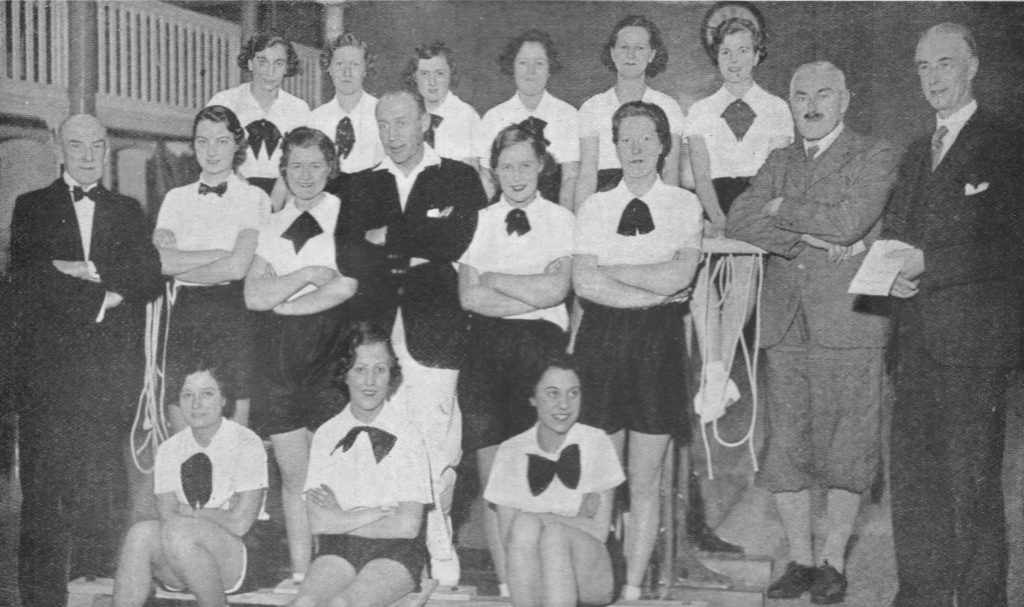
There were separate sessions – priced at 6d each – based on gender and age; season tickets of 10s were available for adults and private instruction was charged at 1s per hour. Women’s sessions were run on Monday and Thursday mornings, Tuesday afternoons, and Wednesday and Friday evenings while men could attend on Monday and Tuesday evenings, Tuesday mornings, and Friday afternoons. There were also children’s sessions on Monday and Thursday afternoons and a separate session for ‘Youths’ aged 14 – 18 on Thursday evenings.
Spa Gymnasium proved successful and popular enough that for the 1936/37 winter season several existing schools and organisations made arrangements to hire the gym for their own use between public sessions and many of these, such as Oriel School, brought their own instructors with them. For the 1937/38 season the YMCA and United Girls Club both wanted to hire the gym for two evenings each per week and the Town Improvement Committee wisely saved themselves a headache by getting the two groups to argue it out among themselves as to who got which nights. It looks as if the United Girls Club may have been pushed out by the YMCA for the 1938/39 season as the latter got their booking request in with the Committee by July of 1938 for four evenings of gym use plus a fifth for badminton. They got in even earlier in 1939 with the Committee granting the YMCA the use of the gym every week day evening for the winter of 1939/40 in May but the swimming bath closed on 17 September following the declaration of war.
Cricket, badminton and boxing
Indoor cricket – yes, really – only appears to have been played here from late-November 1925 to early-April 1926. According to the minutes of the Town Improvement Committee’s meeting of 22 October they agreed to ‘let the Baths be let to Mr Percy Mills during the winter season for indoor cricket at 5s per hour, subject to his undertaking to make good any damage, the Corporation reserving the right of cancellation on occasions when the Baths are let for the day’. The charge was ‘reduced forthwith from 5s to 3s per hour’ at their meeting on 19 February 1926 although no reason is given. It would be unusual for the Committee to volunteer a reduction so one assumes Mr Mills asked for it, possibly because it was not proving as popular as he had hoped. This would explain why it didn’t return the following winter. It is difficult to imagine teams actually playing cricket in the room so it must surely have been some form of school to help develop existing cricketers’ skills or teach it to beginners. There are no reports of any damage, surprisingly!
For the winter season of 1938/9 the space was let for most of the week as a gymnasium to the YMCA but they also provided badminton on Wednesday evenings and Saturday afternoons. In the summer of 1939 they requested to be able to hire the space every weekday evening for the forthcoming winter but the Second World War intervened.
Boxing only appeared once in the calendar on 24 February 1939 when the space was hired for a boxing tournament by the St Gregory’s Athletic Association and Gloucestershire Boxing Association. The fee for the day was £2 10s.
Dances and concerts
In 1908 the three-year lease for the physical culture school expired and while the space was again advertised as available to let as a gymnasium so many enquiries were received for other uses the Mineral Waters & Baths Committee agreed to the outlay of £32 for apparatus to provide heating during the winter. For the winter season of 1909/10 the council’s social club hired the room for popular concerts and all went well until 1912.
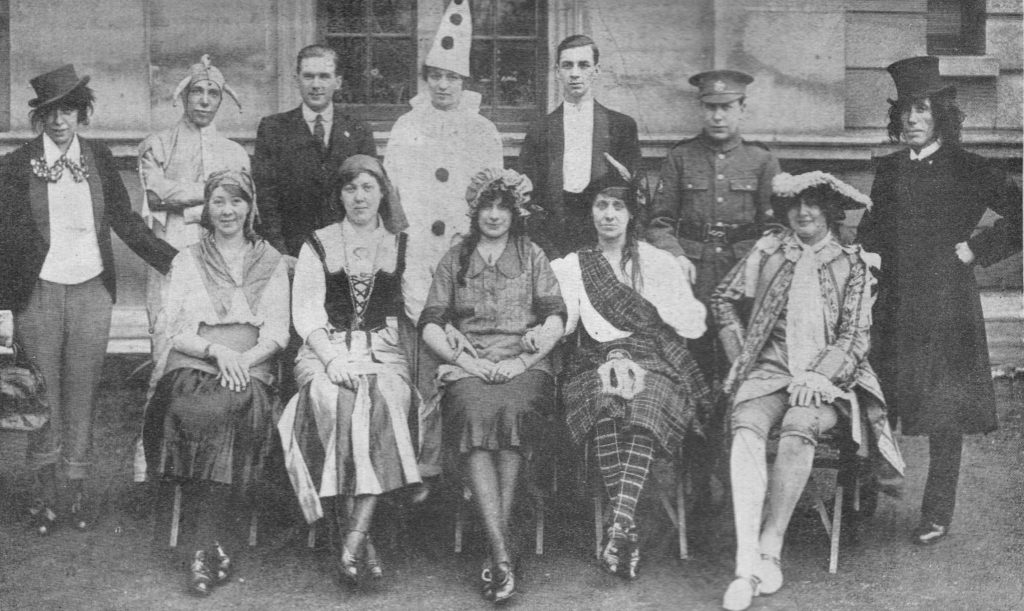
First, the King’s Hall wrote to say they were unhappy about the room hire rates at the Baths as apparently the King’s Hall charged more and therefore it was affecting their takings! Second, several complaints were received from nearby residents in Wellington Street about the noise when dances were taking place and these were sufficient to result in three new stipulations for all bookings – events had to cease at 11 pm, all music had to be played at the Bath Road end of the room and bands were not allowed to employ brass instruments, even on new year’s eve.
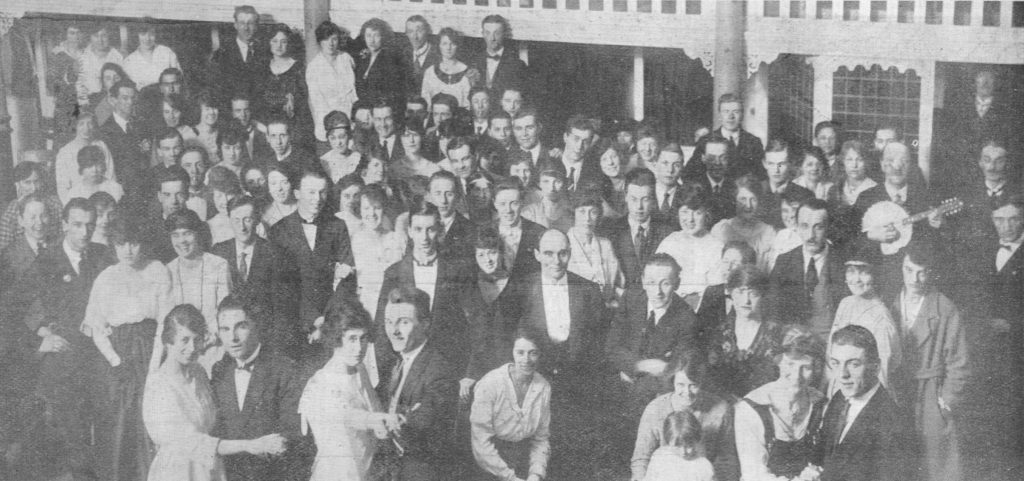
While many people of independent means hired the space for private parties, many hired it to operate dances of classes on a business level, open to larger numbers and for the necessary fee. For example Mrs McLellan’s Tickletoe & Foxtrot Club opened for business on the evening of Monday 14 October 1918 to allow young people to learn the latest society dances. There were also classes on Saturday afternoons at 2.30 pm for babies (!) and 3.30 pm for advanced pupils, plus additional children’s classes during the Christmas holidays. Mrs M was still there for the 1921/2 season and paying 12s 6d per week for the use of the premises.
In the winter season of 1924/5 an Antonio Volpe from London booked the Baths to hold dances four nights of the week
Dinners
During the First World War the winter months when the main swimming bath was boarded over allowed the chance to provide dinner to wounded soldiers who were recuperating in the area. Two of these occasions were recorded in the Cheltenham Chronicle & Gloucestershire Graphic. Note the presence of a pianist and musicians at the far end in both photographs.
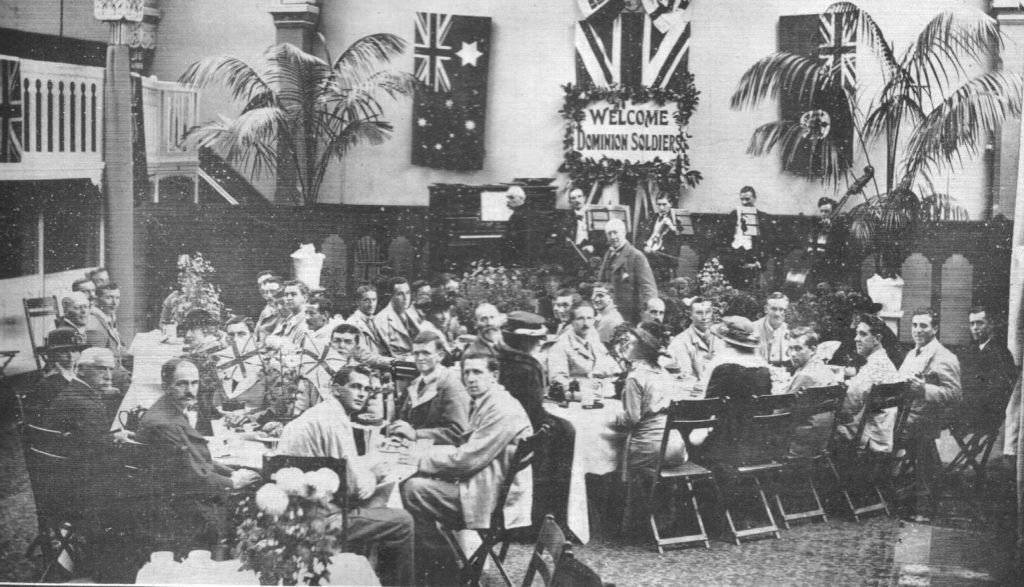
On 19 October 1915, a Mr & Mrs F Brandt entertained a number of wounded colonial soldiers from the various Red Cross and St John’s Ambulance hospitals in Cheltenham together with a number of their personal friends.
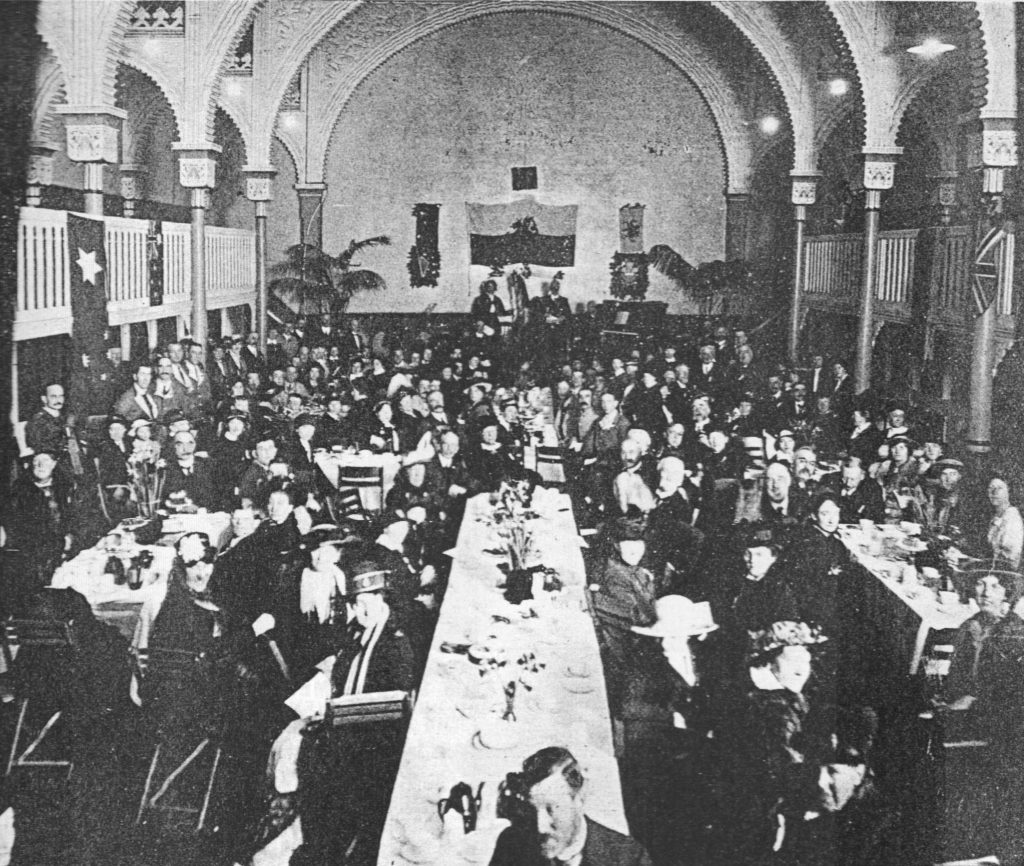
A much larger ‘festive gathering’ was held on 1 March 1916 to mark St David’s Day and among the guests were wounded Welsh soldiers from both Cheltenham and Gloucester hospitals.